Work-Life Guide
Designed whilst I worked at The Stepstone Group
In 2023 The Stepstone Group committed to exploring greenfield opportunities in order to expand their portfolio. 70% of visitors to the Stepstone website are passive browsers never acting on a listing or offering value to the business. At the same time, in a post pandemic world people are increasingly seeking a more harmonious Work-Life balance.
The following case study follows the journey from design sprint to proof-of-concept of Stepstone’s “Work-Life Guide”.
Background
After months of rapid prototype testing, we didn't see significant user engagement with our proposed solutions for helping people improve their work-life balance.
We knew after salary, a healthy work life balance was the number one aspect of a job that candidates seek. With deadlines fast approaching, it was time to get together in person and focus our efforts. So on a crisp early morning in Spring, I got a 5am flight to London, arriving precisely on time for our design sprint kick off!
Problem framing
“Fall in love with the problem, not the solution” - Uri Levine, co-founder of Waze.
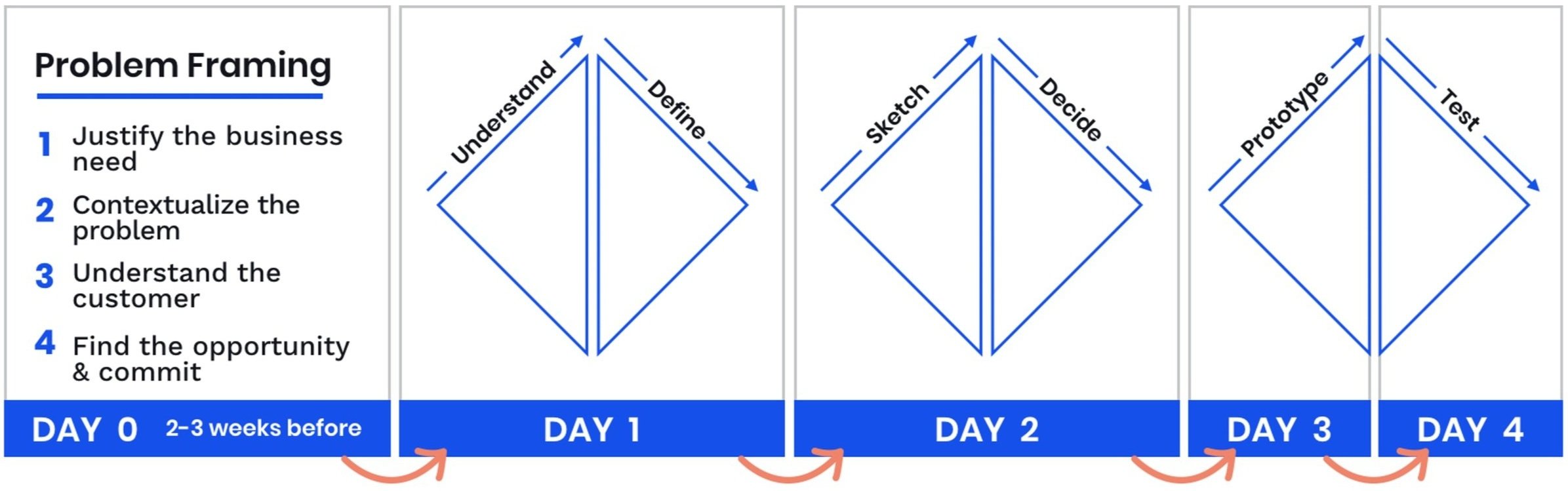
Of course we didn’t just jump into a design sprint without doing the groundwork. The weeks before the sprint we spent time capturing stakeholder’s perspectives, made sense of our user needs, aligned the various teams and framed the problem into an actionable design challenge.
Based on research from 2022 we identified the user problem with the greatest opportunity would be seeking a better sense of flexibility and control in order to improve one’s work life balance.
We followed a structure set out by the Design Sprint Academy
Ensure effective outcomes
By framing the problem we bring everyone onboard and aligned on what we want to solve by the end of the design sprint.
Design Sprint Challenge
How can we help future career planners find work better suited to when and where they want to work?
Understand & Define
Empathise with our users
Based on multiple surveys, we saw audience segments forming.
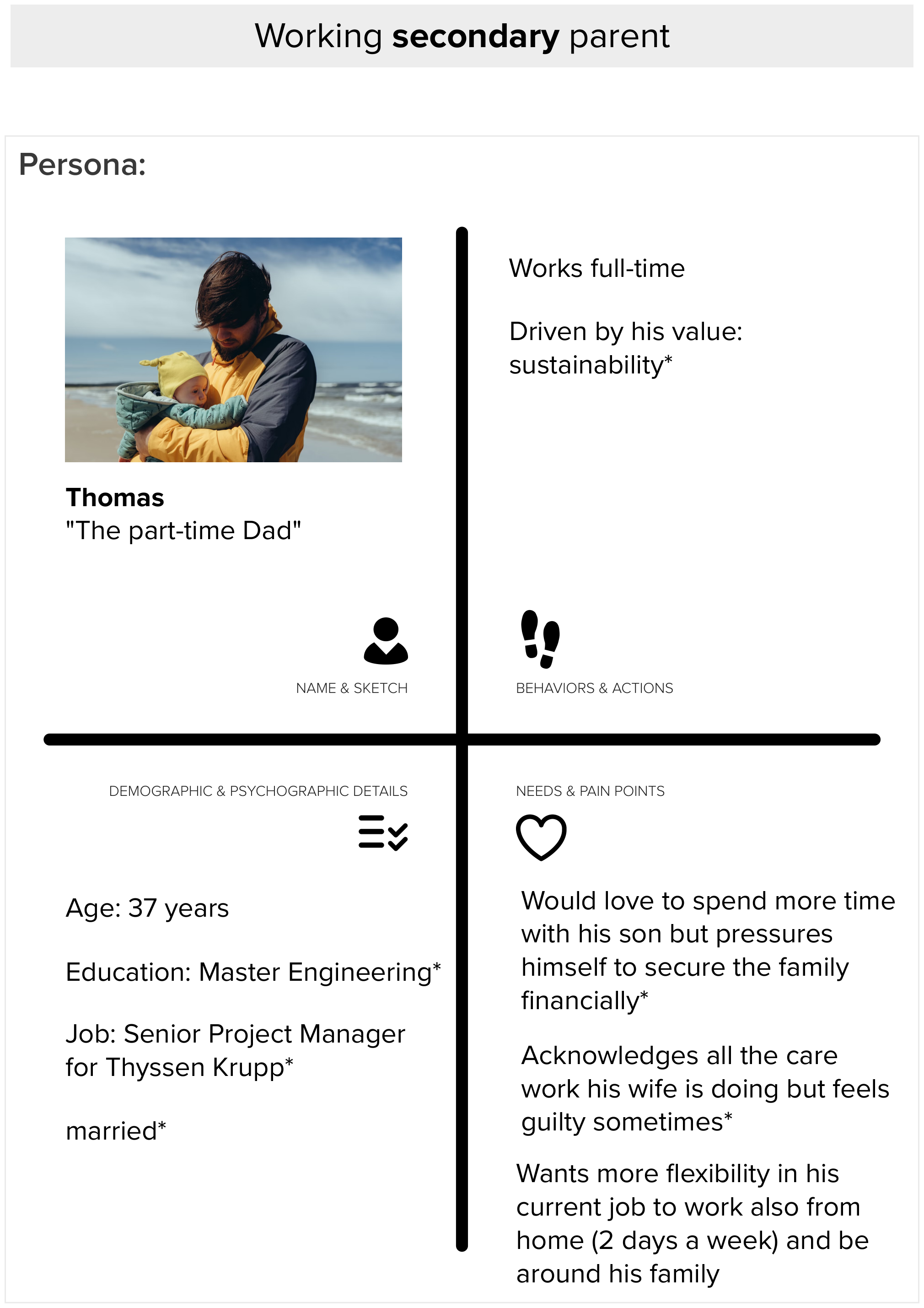
Demographically these could be based on age, gender, life stage, but we saw much more value on focusing upon the psychographics.
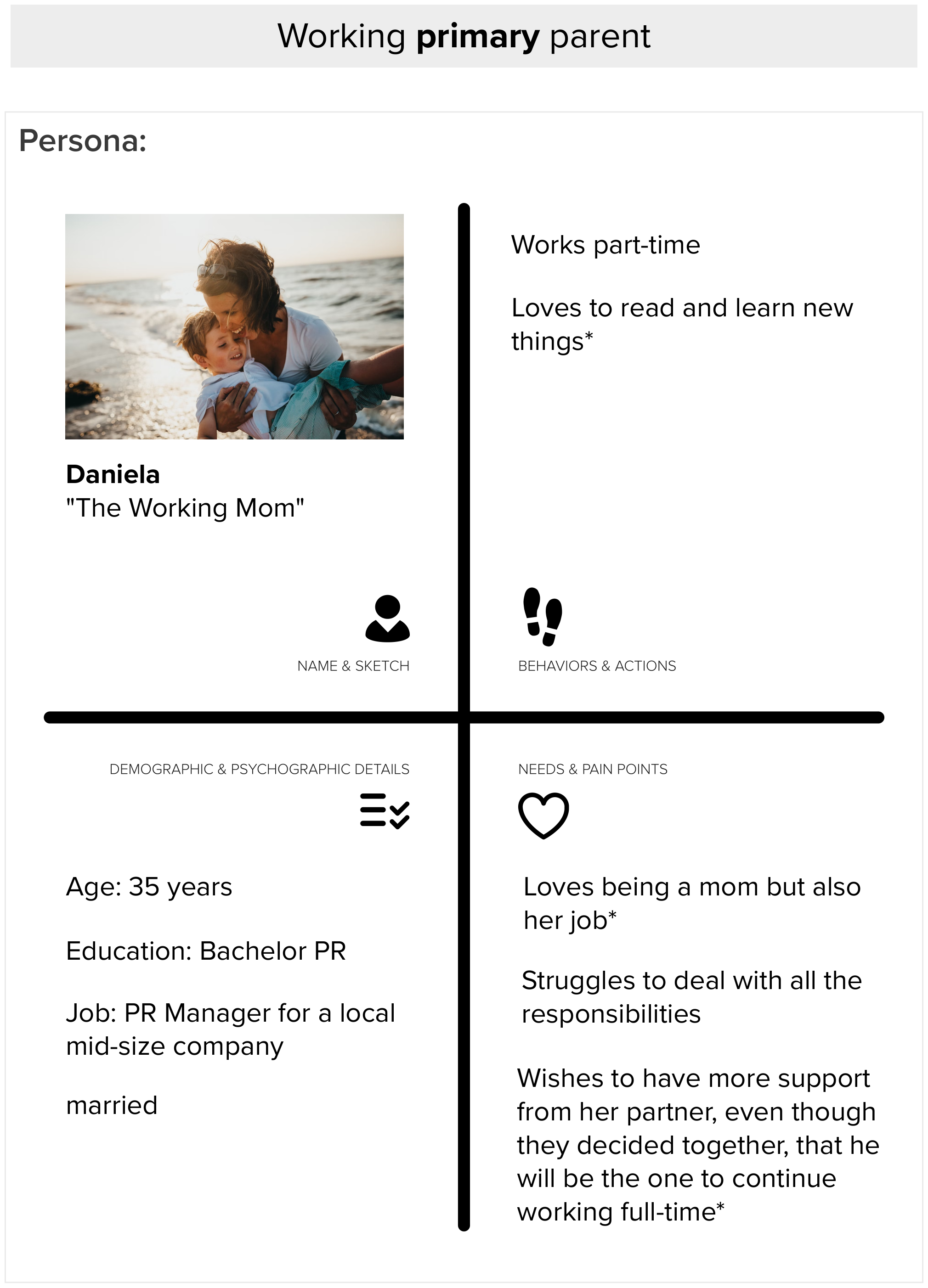
Two clear segments developed:
Users who urgently need flexibility based on caring responsibilities.
Ego-centric reasons where flexibility is a want not a need.
Job & Career expectations:
where family and friends are not neglected
as close to home as possible
has the greatest flexibility
Identified by passive and active job seekers (Germany & UK)
Top 3 factors of work-life balance:
Flexibility of time and place
Meaningfulness
Stress
Identified by Stepstone users (Germany & UK)
Defining the problem
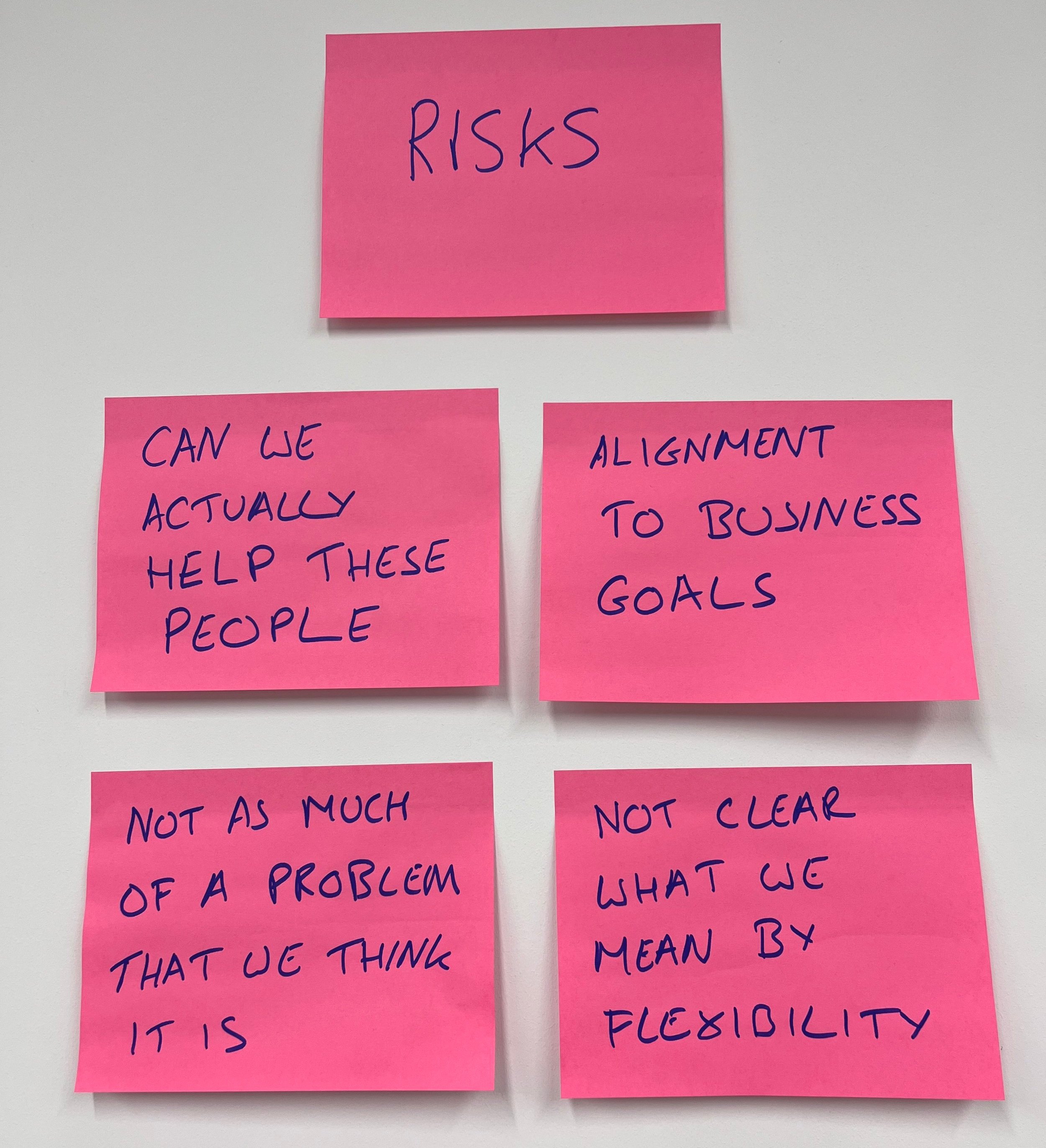
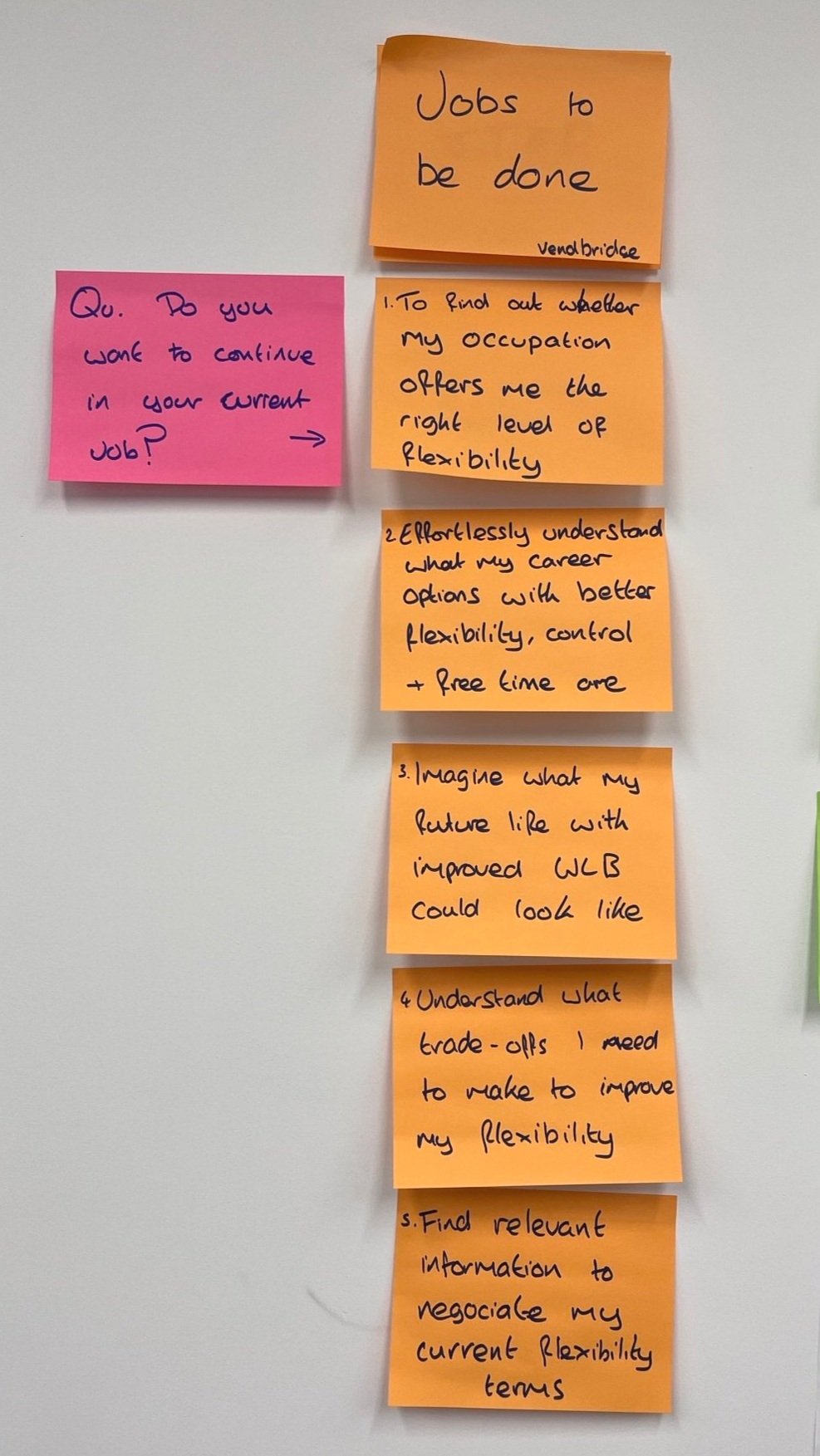
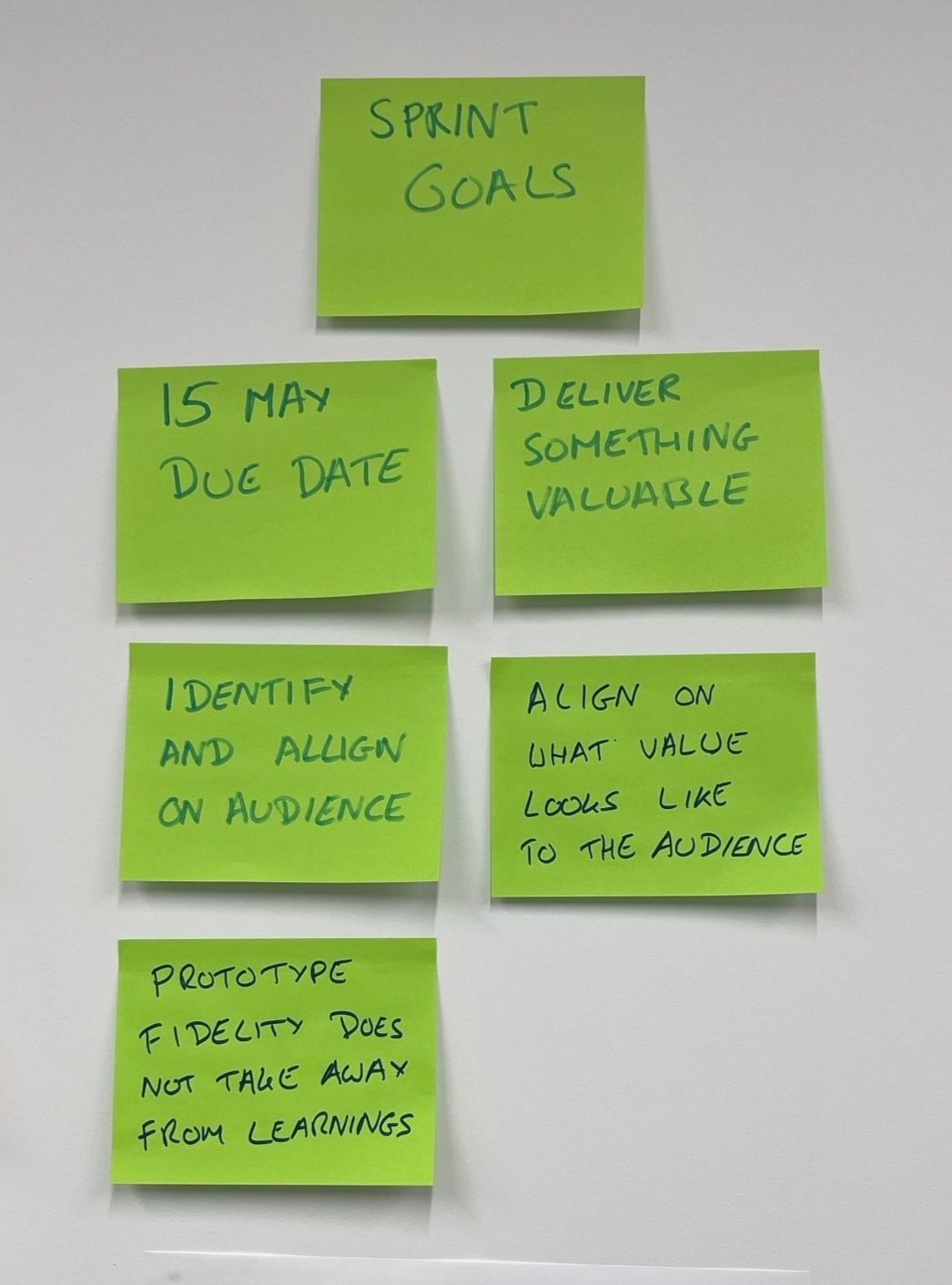
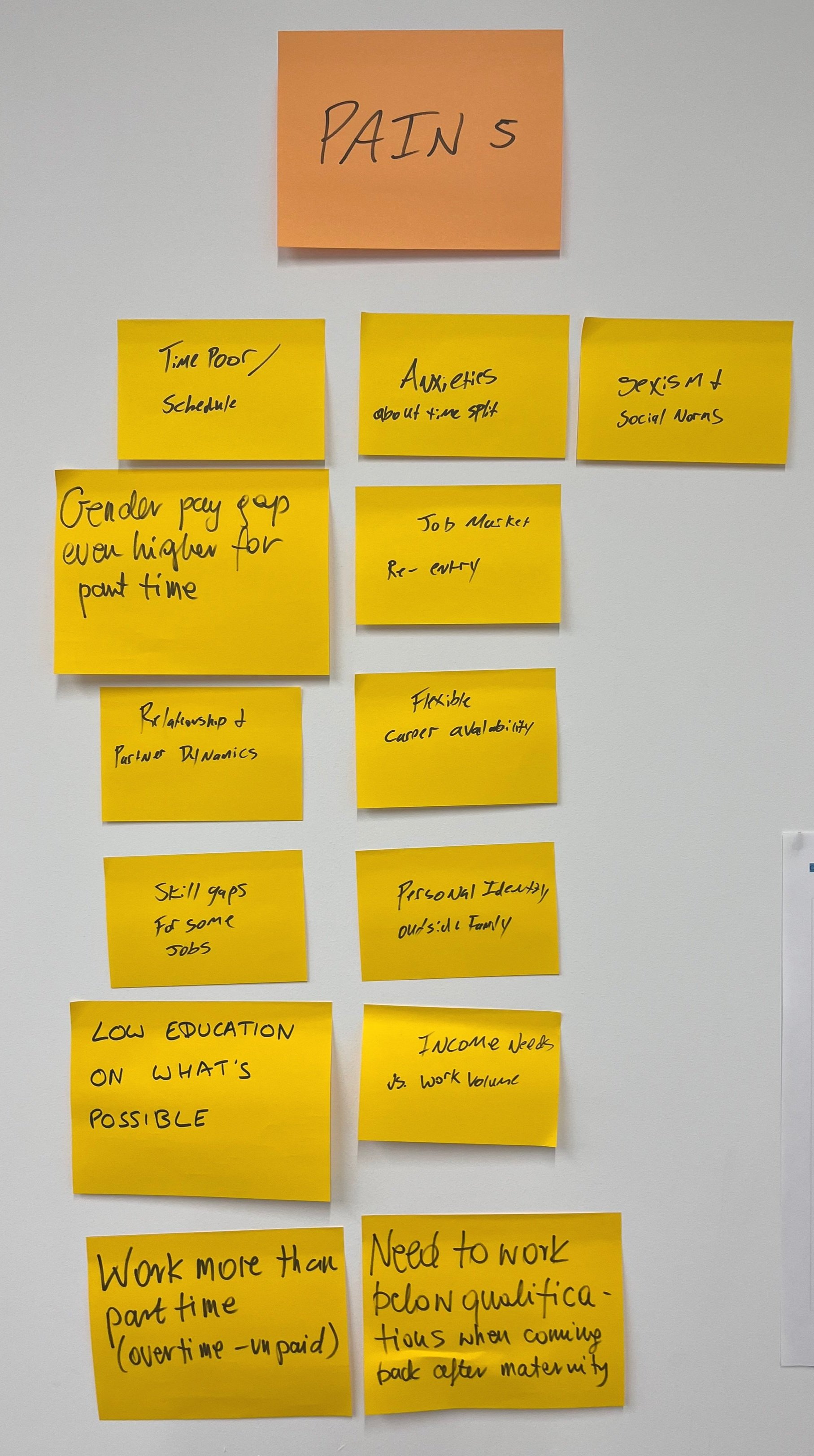
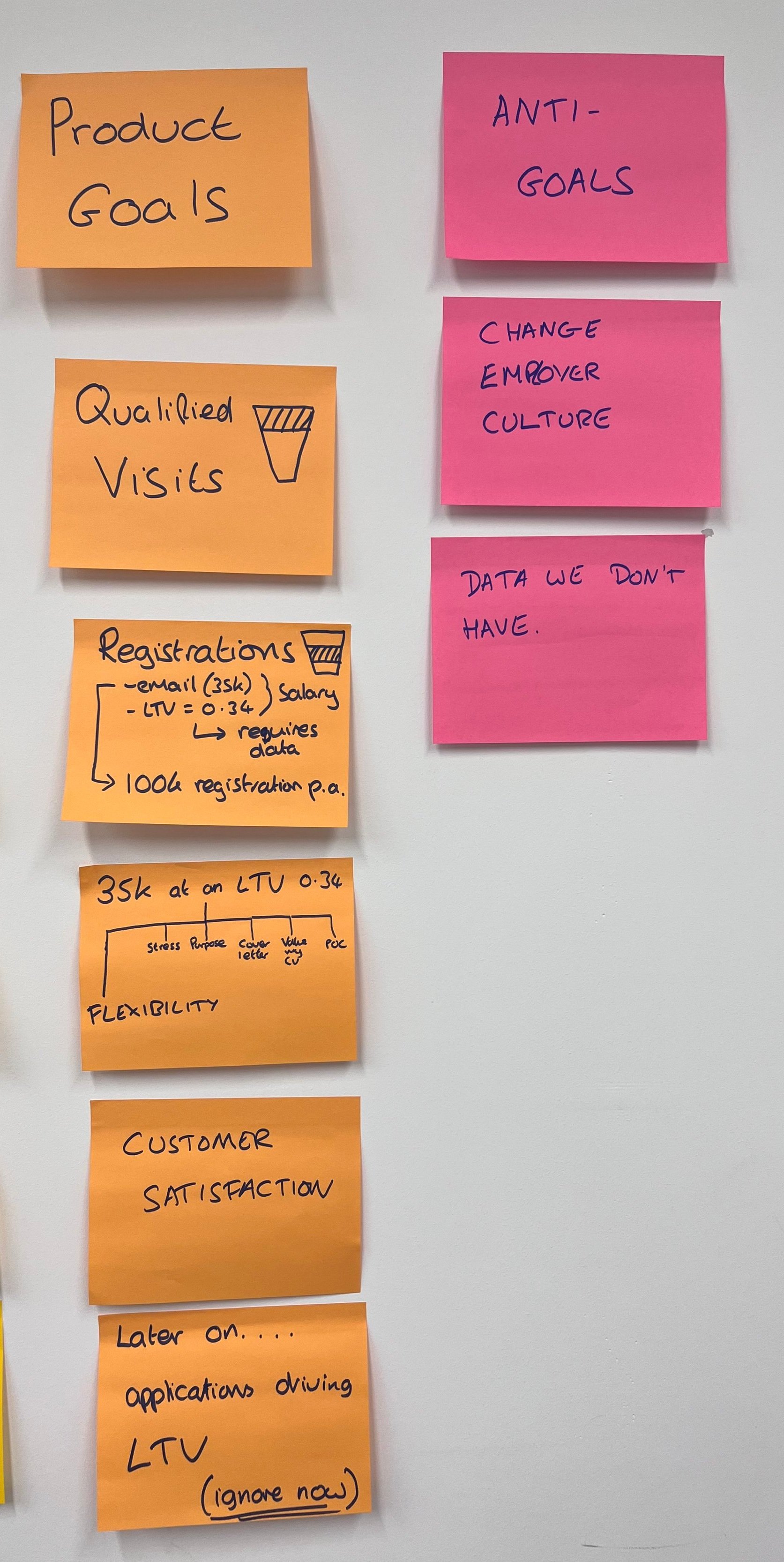
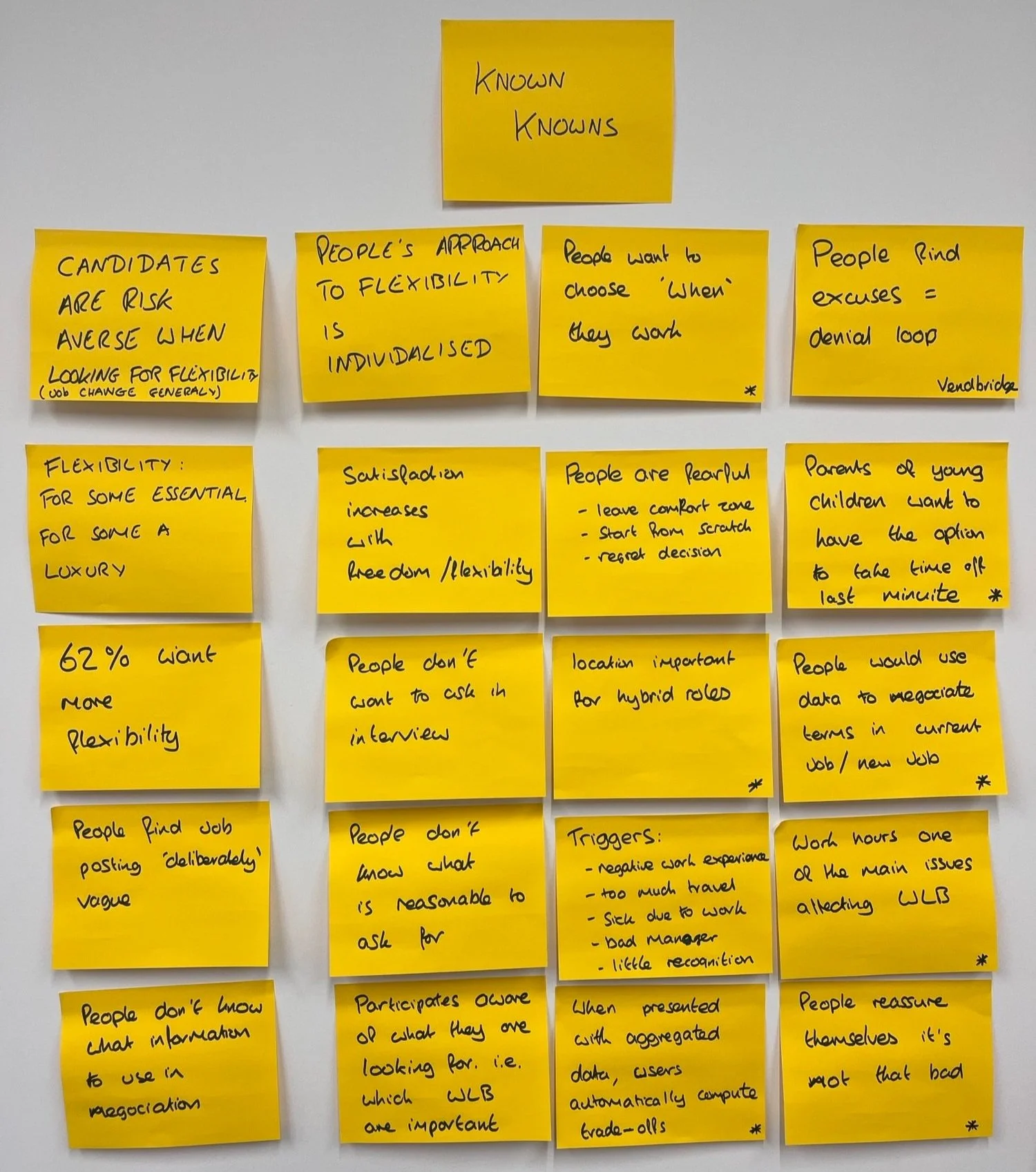
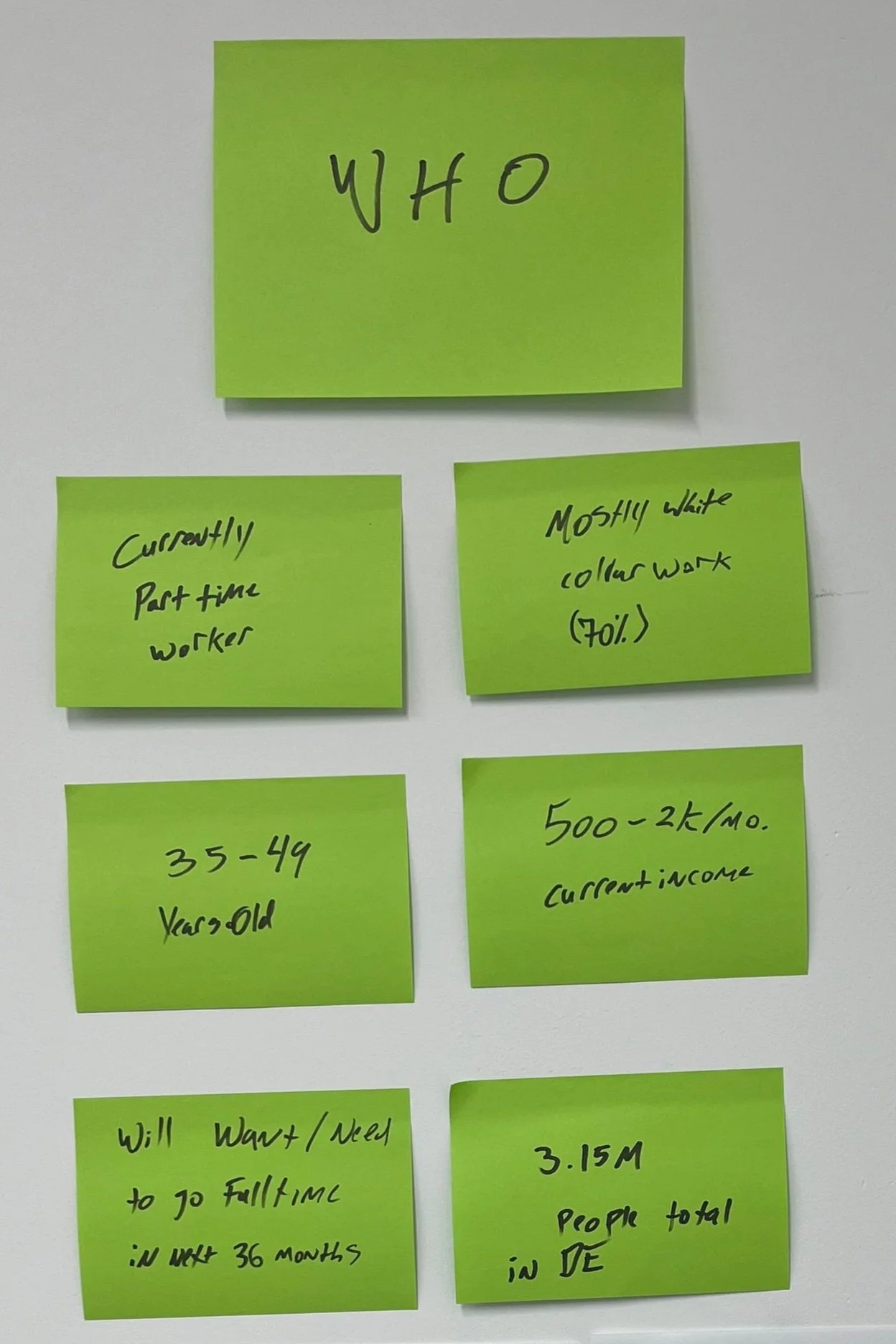
We reviewed and identified key insights and jobs-to-be-done we knew to be true about our users to help focus our decisions. We captured all our known-knowns, gaps and assumptions. We also completed lightning talks discussing how competitors or other companies or services approached this problem before. Finally we agreed upon risks and anti goals.
Pick a target
As a team we voted and identified the most vital area of opportunity. We decided to focus on the first user segment, the working primary parent or caregiver who struggles to inform themselves of flexible opportunities as they return to work after an extended period of leave (eg. maternity leave).
Assumption
By meeting the “need” of flexibility required by primary parents or caregivers, the “want” of second segment may be fulfilled simultaneously.
Sketch & Decide
With out target defined it was time to get creative! As a team we sketched numerous ideas. From the weird to the wonderful, from the simple to the strange, using the framework of crazy 8’s and then refining those ideas we came up with scores of possible solutions.
Fast paced decisions
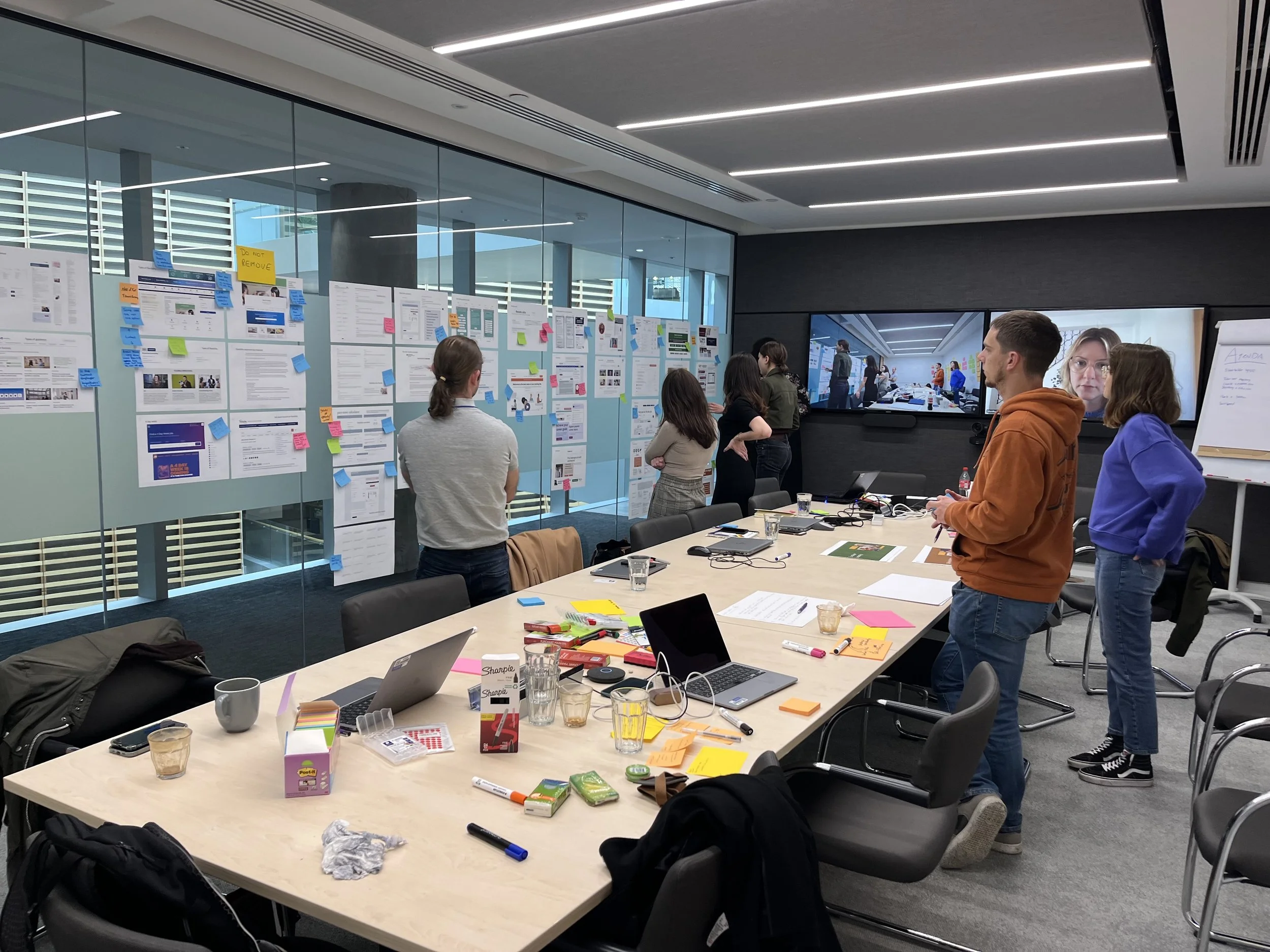
Voting with dots allowed heat maps of favourite ideas or concepts to emerge. Our decider help us move forward by having the final say.
Storyboarding
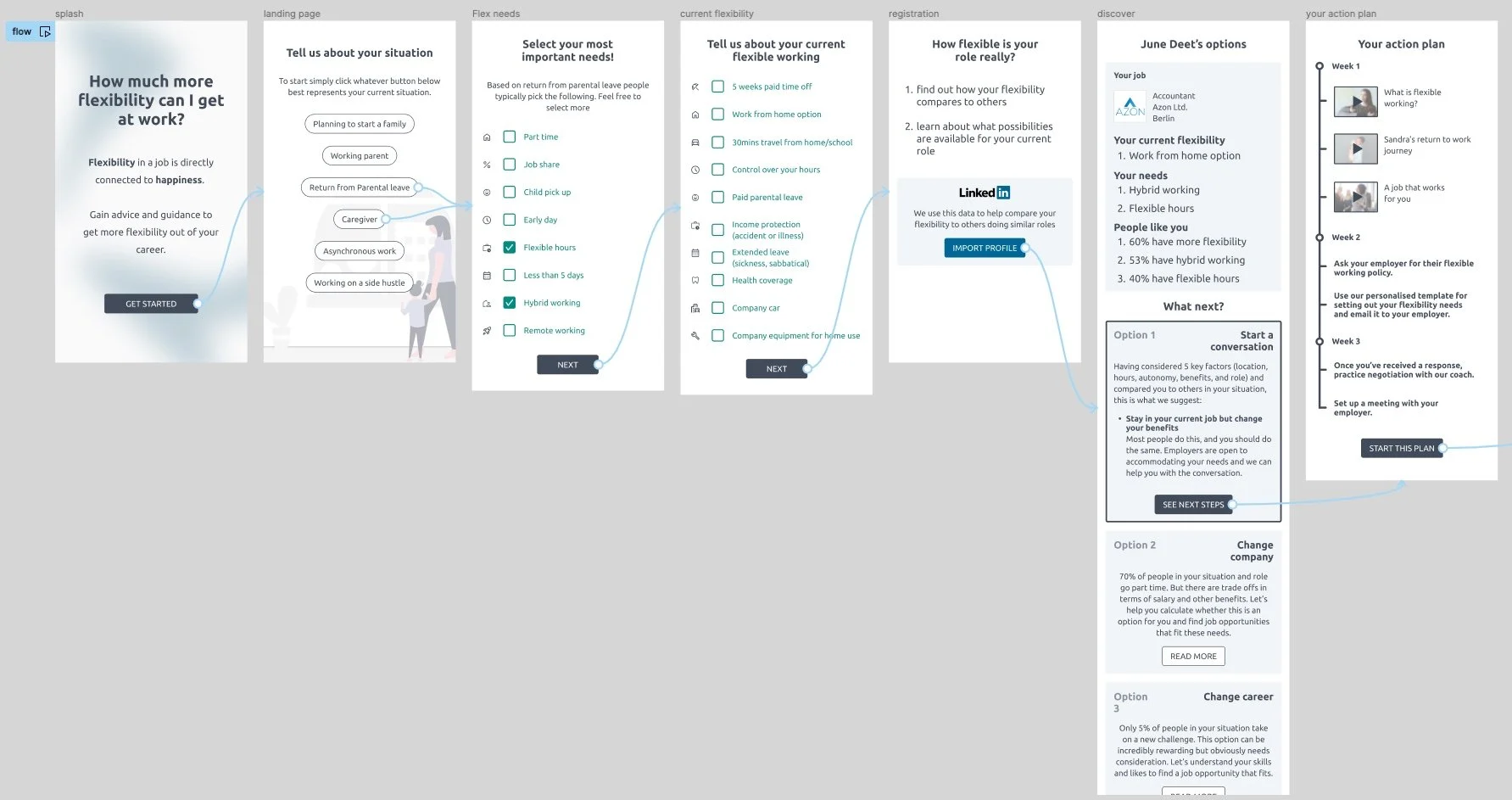
To align everyone on what should go into our prototype we created a storyboard and discussed what should or shouldn’t be included. We then sketched a rough wireframe and agreed on content it should include and at what stage in the user journey.
Prototype
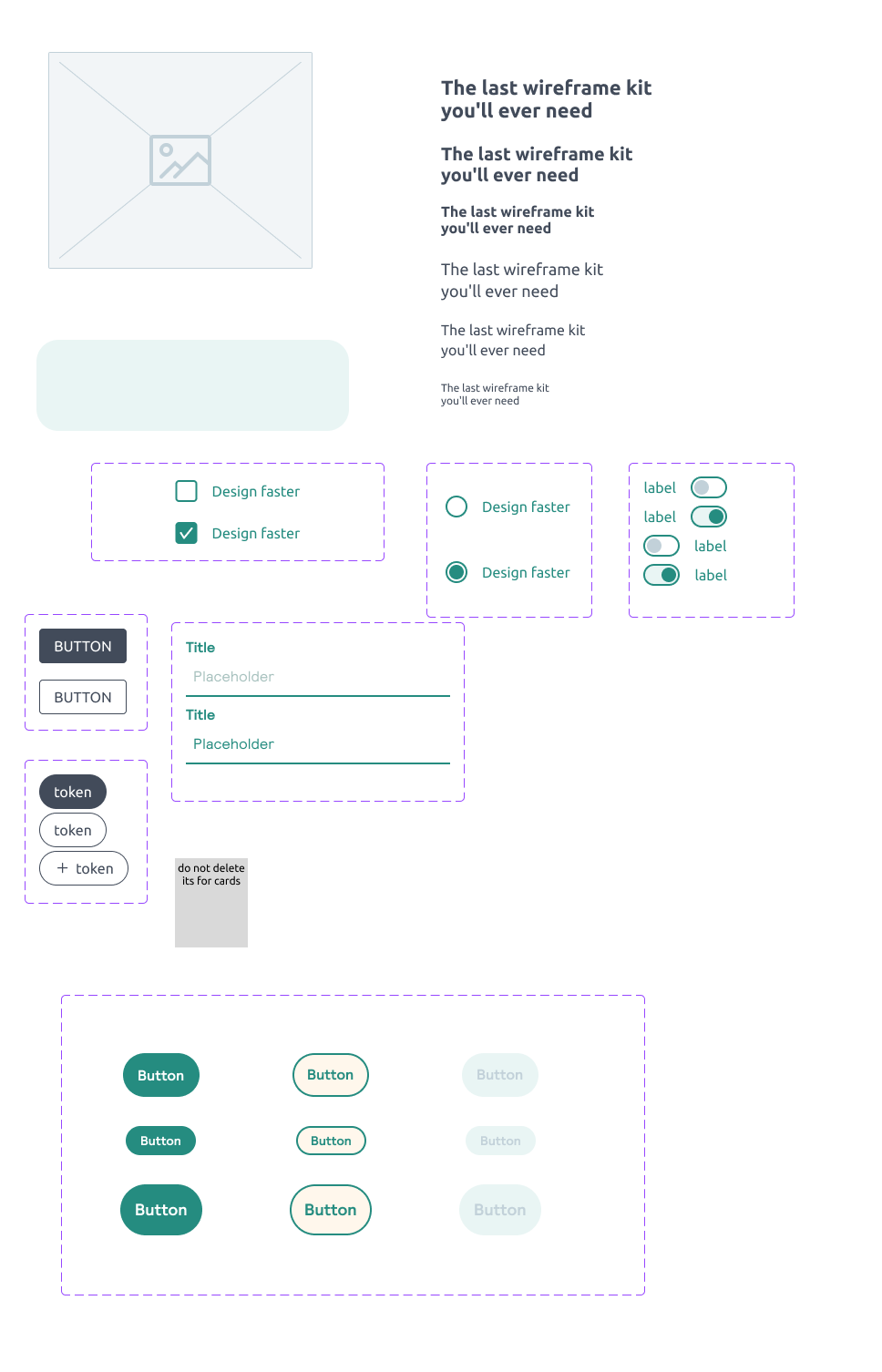
Working in Figma we built a basic low fidelity prototype that could simulate our solution to users and help us gather signal on what to pursue further. To move quick we created a simple design system with basic interactive states.
AI tooling
We used Chat GPT to help generate engaging content at a fast pace. It was also useful at suggesting better text alternatives or titles.
Test
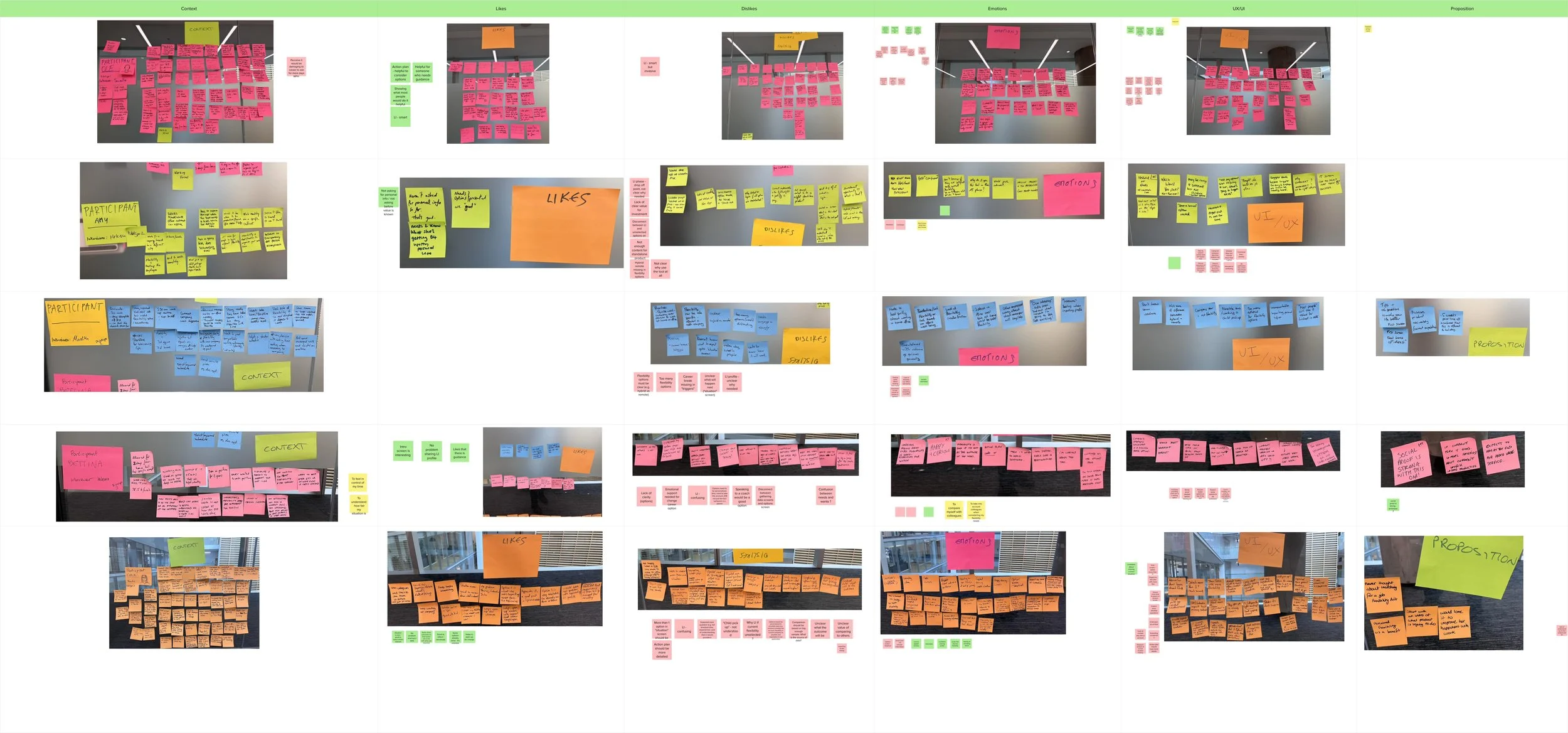
On the final day of the sprint we put our solution in front of users. This consisted of 7 x 1 hour moderated interviews. Whilst the interviews were happening , those observing took notes on stickies to make the synthesis process much quicker.
At the end of the day, we shared and discussed our learnings. We reviewed any areas of opportunity and then agreed on our next steps.
High level learnings
Users struggled to comprehend the value of the product from the first screen.
Usability errors caused hesitation
In general, there was a lack of clarity surrounding what was being offered.
Iterate & Learn
After the design sprint we spent 3 months iterating and refining on the original concept. We completed several more rounds of moderated user testing, gaining more and more insights on not just our product, but also the audience we were targeting.
We also had to prepare our proposition for the German market. This meant not just collaborating with engineers and data teams who were building our concept, but also working with the Brand team, e-commerce and content writers to optimise our chances of success.
Emotional entry points
We saw two motivational entry points for our product:
away from toxic environments, too many restrictions, no career opportunities
towards to sustainable solution, understanding boss, kid’s sick days allowance
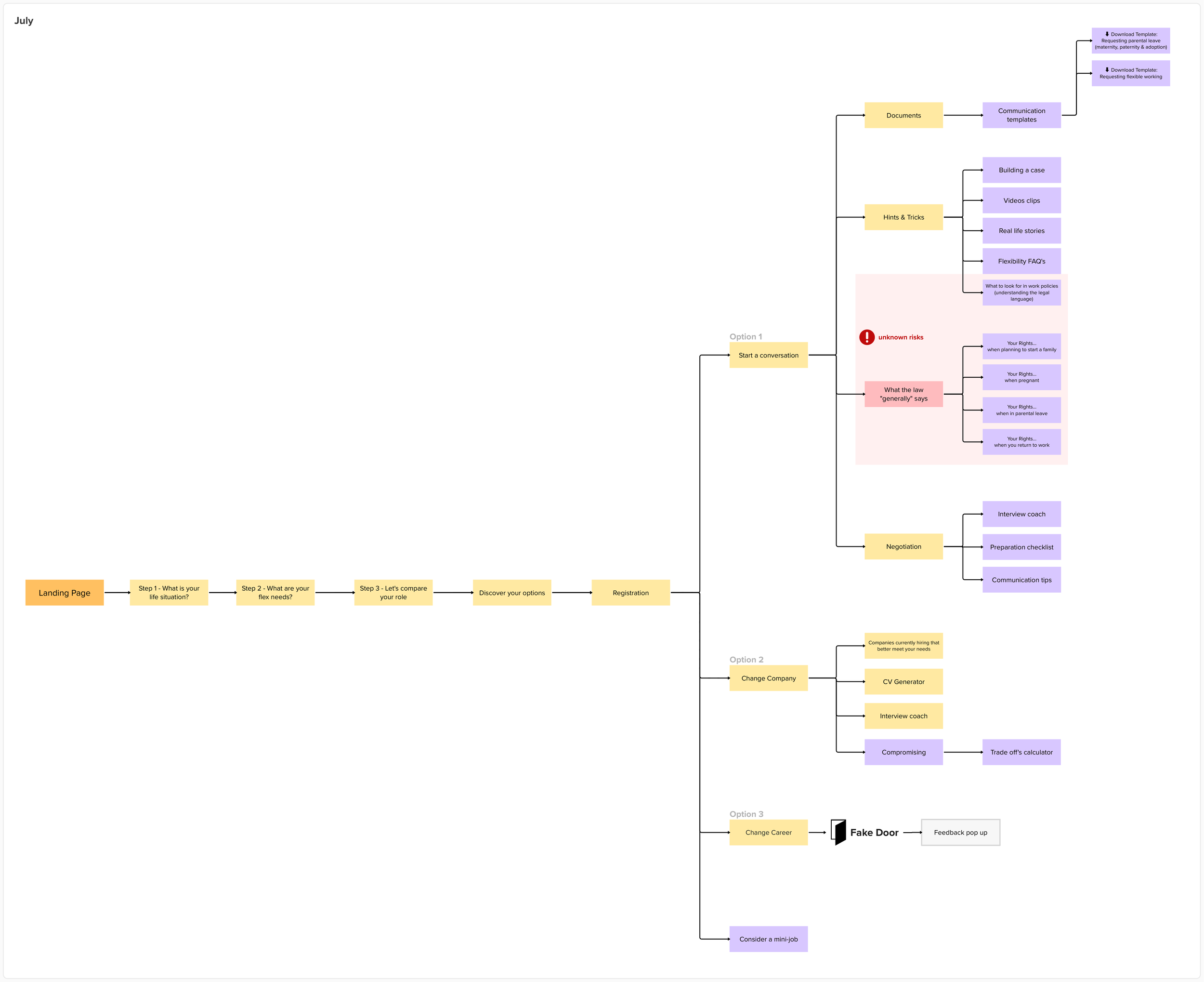
Mapping complex concepts
We used a range of maps to demonstrate concepts, flows, or mental modes. This helped keep everyone aligned and clear up confusion.


Navigating bias
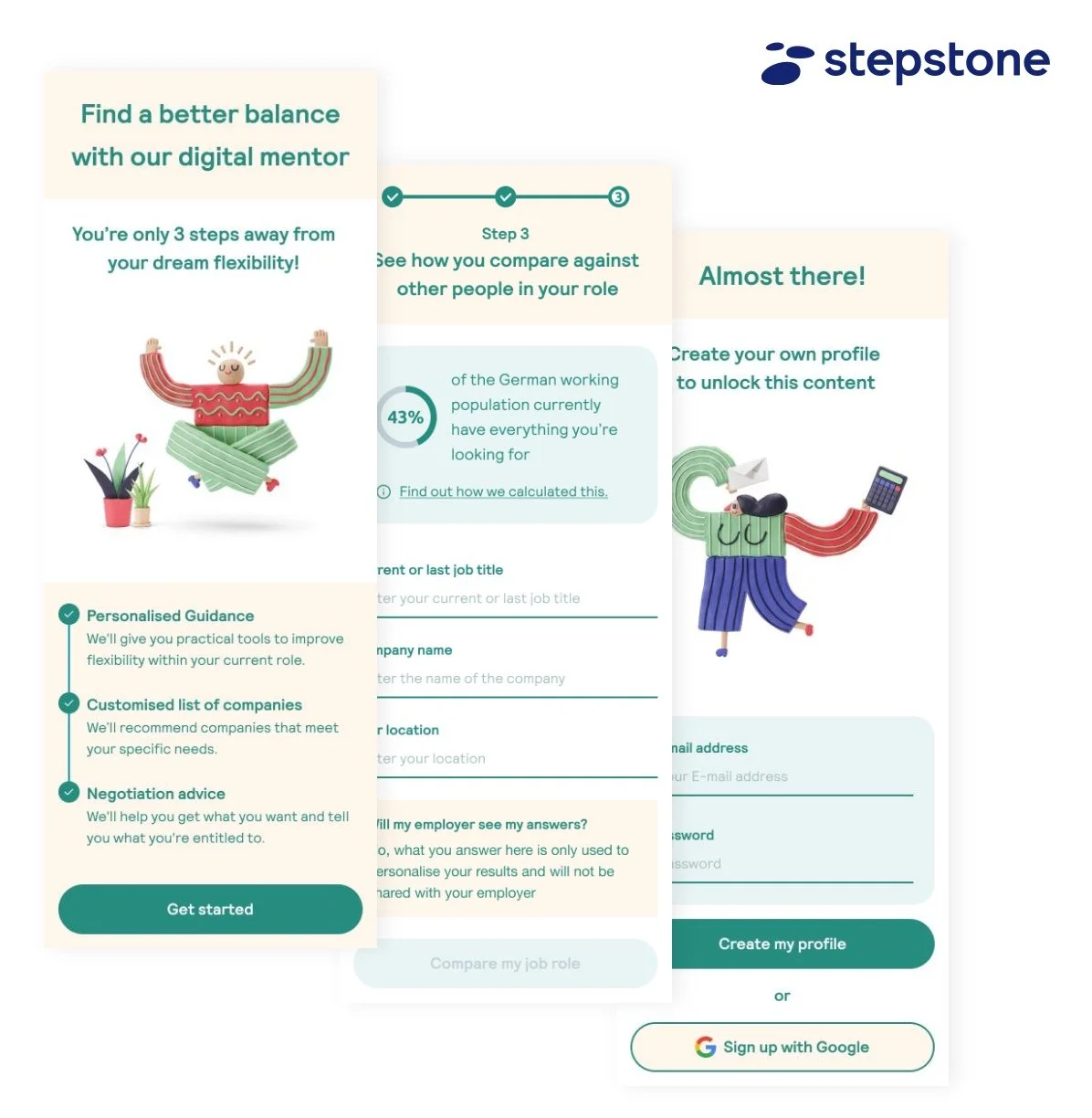
Stepstone has a strong brand visibility in Germany, to caveat this bias we used an unbranded iteration to test our value proposition.
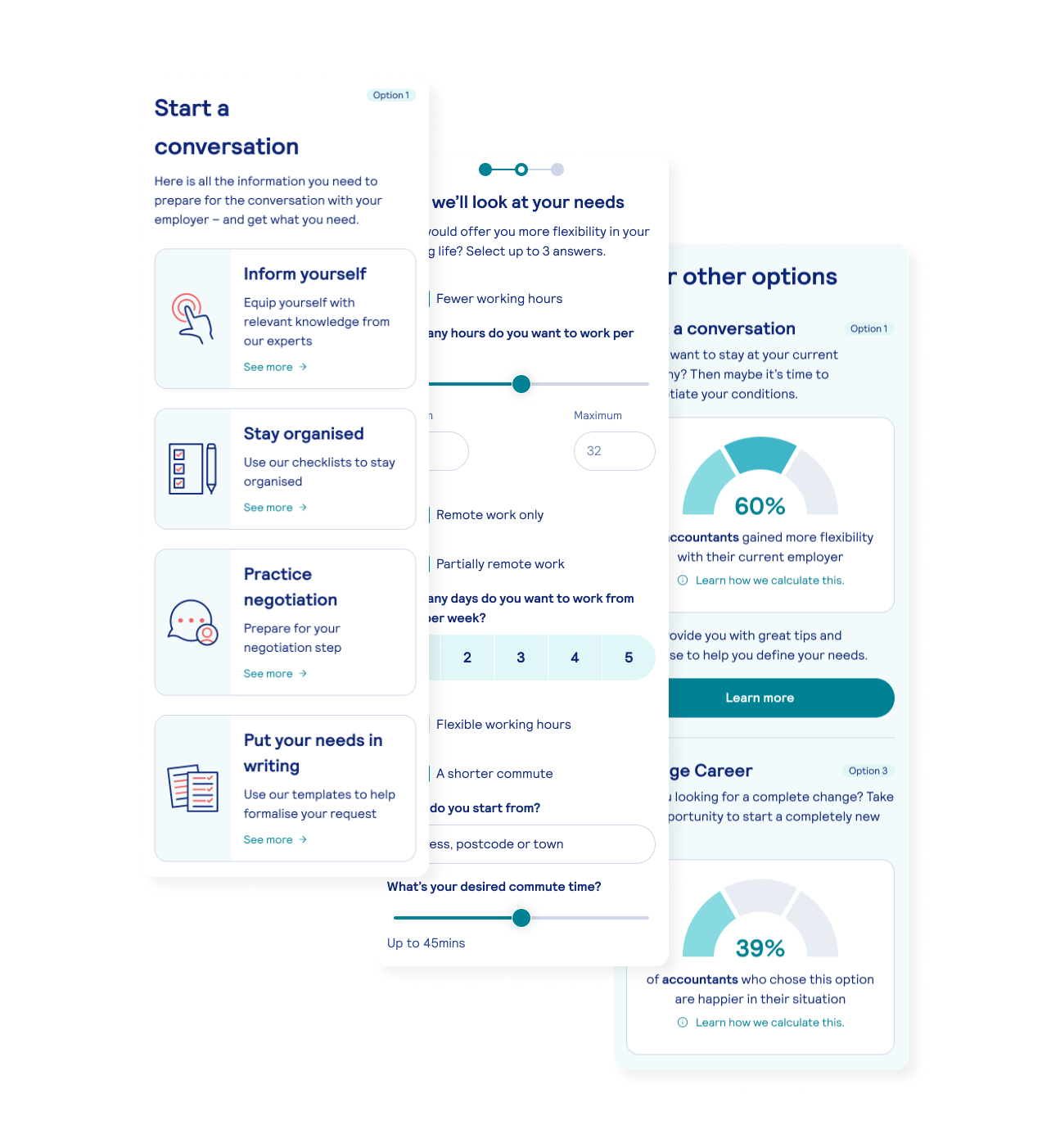
Going live
After many rounds of tests, surveys, SEO/SEA optimisation, discussions and internal debates our product was ready to go live. On the 19th December 2023, Stepstone’s “Work-Life Guide”" was released.
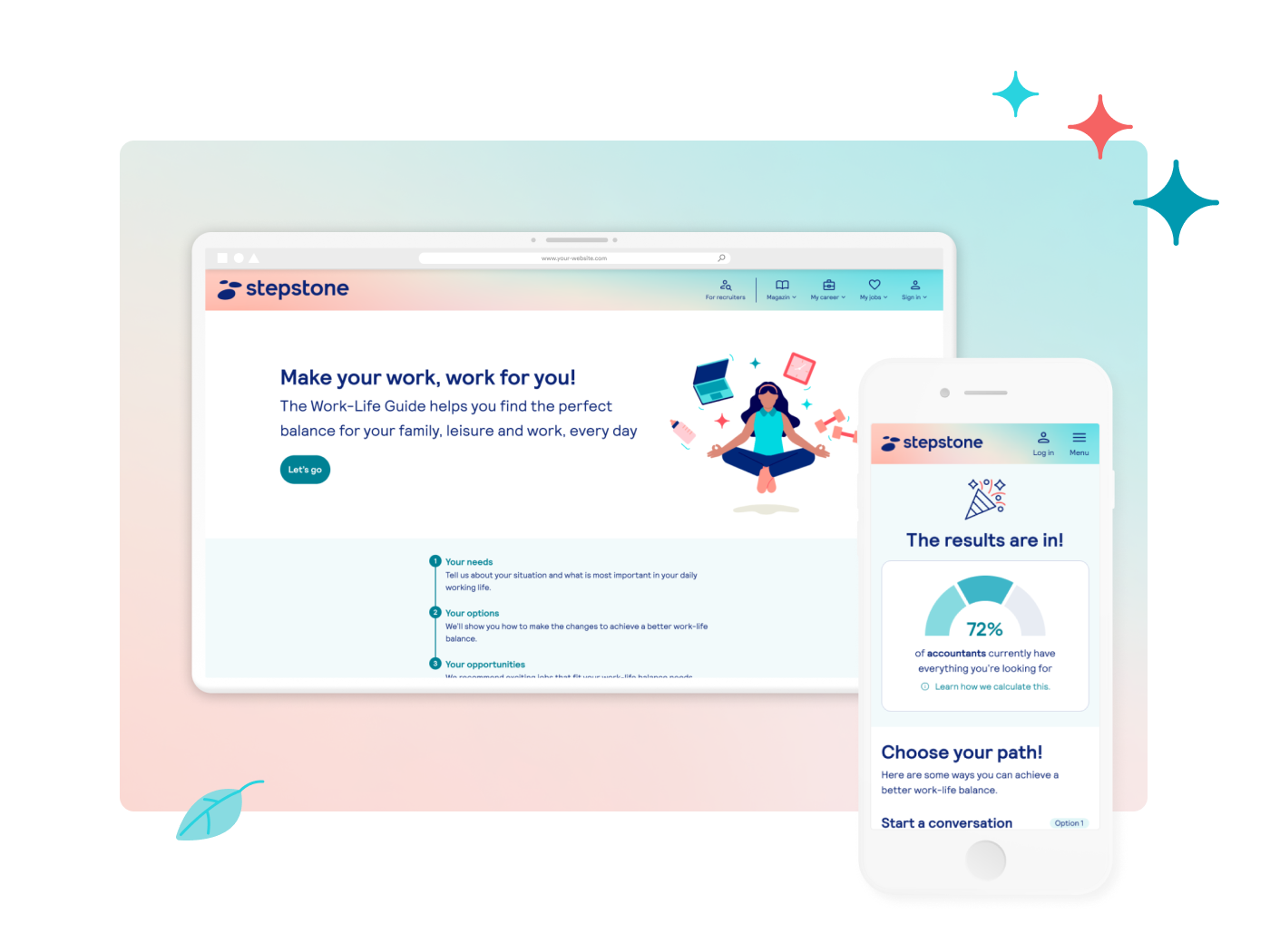
The Stepstone Group
The Stepstone Group has been helping companies to make great hires, and supporting candidates to find the right job for over 25 years. They operate in over 30 countries, under 20 different brands around the globe.